





01
Percepta
A clip-on camera for glasses that reads the street ahead and speaks hazards aloud, built to help visually impaired people move through it.


 unique experiences that matter.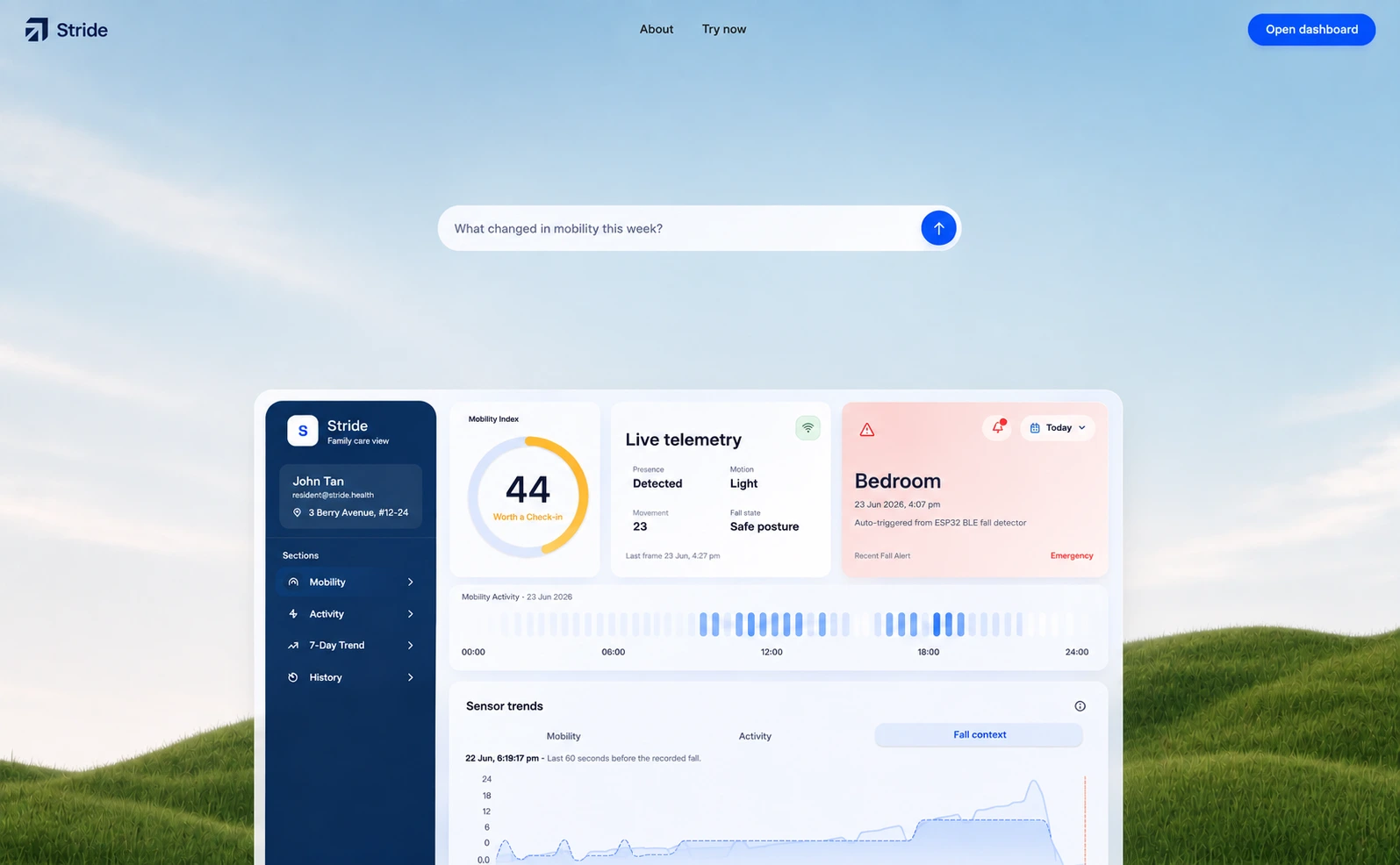
Then it has to learn.
def forward(self, x):
    x=self.pool(F.relu(self.conv1(x)))
    x=self.pool(F.relu(self.conv2(x)))
    x=x.view(-1, 16 * 4 * 4)
    x=F.relu(self.fc1(x))
    x=F.relu(self.fc2(x))
    x= self.fc3(x)
    return x
Searched repository for pytorch training pipeline
The code fixes gradient accumulation by clearing .grad after each optimizer step. I’ll verify that placement matches nearby examples and doesn’t change first-step behavior.
Used Figma Integration
I’ve verified the gradient-reset change. I’ll reflect it in the Figma slide with a focused before-and-after diff, a one-line explanation of its impact, and the test status.
Loaded a tool, ran a command
Edited a file, ran a command
Review GitHub and Figma, then use main.ipynb to improve the PyTorch training pipeline. Run tests, then summarize changes in README.md.
01
A clip-on camera for glasses that reads the street ahead and speaks hazards aloud, built to help visually impaired people move through it.
02
Conditional VAE and DCGAN image generation on CIFAR-10, and a DQN agent retrained across four different gravity regimes.

03
Brings dormant GitHub projects back to life — sandboxes the repo, plans the smallest viable repair, and hands back a preview you can open.
